
Haifaa Al-Mansour Talks About Her Latest Film ‘Unidentified’
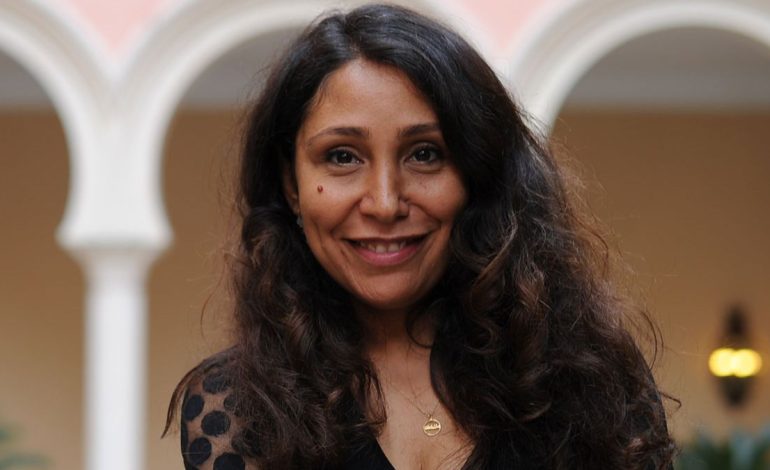

In her latest film, acclaimed Saudi filmmaker Haifaa Al-Mansour turns to the tense, gripping language of the crime thriller. But for Al-Mansour, the genre is more than a vehicle for suspense; it’s a powerful tool for asking difficult questions. “I was drawn to making a crime thriller because it’s a genre that allows you to ask uncomfortable questions in a very accessible way,” she says.
That film, Unidentified, follows young police officer Nawal, played by Mila Al-Zahrani, as she investigates the death of a woman found in the desert. The mystery deepens not from a lack of clues, but from a wall of silence. The victim’s tight-knit community, including her own family, refuses to identify her.
“The case becomes a confrontation with fear, silence, and the cost of truth,” Al-Mansour explains. She sees the thriller’s momentum as a way to pull audiences into a deeper exploration of social tensions and moral ambiguity. “For me, the genre was a way to talk about silence, complicity, and courage without making the film feel like a lecture.”
The Weight of a Name
The victim, we learn, is a young woman named Amal. Her trip into the desert was a secret romantic meeting, a private choice that becomes her family’s public burden after her death. “I wanted to highlight how silence can feel safer than truth,” the filmmaker notes. “No one believes they are doing something cruel. They believe they are protecting themselves. That moral gray area interested me. The tragedy is not only Amal’s death, but how quickly she is erased.”
A Reflection of a Journey
In Officer Nawal, Al-Mansour paints a portrait of quiet, persistent determination. As a junior officer in a male-dominated station, Nawal’s insights are often dismissed. This struggle is one Al-Mansour knows intimately.
“Nawal’s experience — being questioned, underestimated, told to be patient or quiet — is something I know very well,” she shares. “Her strength is not that she never doubts herself, it’s that she continues anyway. That felt honest to my own journey.”
Yet Nawal is not entirely alone. She finds an ally in her mentor, Majid, portrayed by Shafi Alharthi. This relationship mirrors the supportive figures in Al-Mansour’s own career. “Majid is not perfect; he hesitates, he is shaped by the same system as everyone else. But his willingness to support Nawal, even quietly, reflects the kind of allyship that can make real change possible.”
The director wrote the film specifically for Al-Zahrani and Alharthi, having worked with them on her 2019 film The Perfect Candidate. “I didn’t want Nawal to feel like a symbol; she needed to feel human. Mila has an incredible ability to communicate inner conflict with restraint,” Al-Mansour says. Of Alharthi, she adds, “He brings warmth and intelligence to Majid. He makes the character believable as someone who is evolving, not suddenly enlightened.”
Cinema as Conversation
Ultimately, Unidentified uses its central mystery to frame a broader discussion about gender, expectation, and change in contemporary Saudi society. “These conversations are happening more openly now, especially among younger women,” Al-Mansour observes. “There is ambition, impatience, hope, and frustration all existing at the same time. That is what happens during periods of rapid change.”
For Al-Mansour, cinema has a vital role in this evolution. “Cinema has a responsibility not just to celebrate progress, but also to ask what still hurts, what still needs work… My main goal with this film was to challenge the audience, to present problems that seem to have ‘tidy’ solutions, and then present additional information that throws everything into question.”
Her hope is that the film will spark empathy and dialogue. “If the film encourages conversation, and a willingness to look closer at what we choose not to see, then it has done its job.”
Through the lens of a thriller, Haifaa Al-Mansour invites us all to listen closely, to question the comfortable silence, and to recognize the profound courage it takes to speak a name others wish to forget.
Also Read:
Jazan Festival Transforms the Waterfront with Art and Culture
Minzal Celebrates Saudi Heritage Through Culture and Experiences in Diriyah