


Gaza Hospital Receives Fuel Supply, but It Will Last Only Two Days

The generators at Al-Awda Hospital in central Gaza roared back to life on Friday evening. For a moment, the overwhelming silence of suspended services—the quiet of idle operating theatres, stalled labs, and darkened wards—was broken. This reprieve came not in the form of a lasting solution, but in a delivery of 2,500 liters of diesel. A lifeline measured not in weeks or months, but in hours. It will last, hospital officials calculate, about two and a half days.
This is the stark arithmetic of survival in Gaza’s health sector. Al-Awda, a major facility in the Nuseirat district ravaged by over two years of war, normally consumes up to 1,200 liters of fuel daily to power its life-saving work. It cares for 60 in-patients and receives nearly 1,000 people seeking treatment every day. By Friday morning, it was down to 800 liters. Most services halted. Only the barest essentials—the emergency unit, maternity, and pediatrics—stayed open, powered by a small rented generator.
“We are knocking on every door to continue providing services,” said Mohammed Salha, the hospital’s acting director. He voices a accusation heard consistently from Palestinian health officials: that Israeli authorities deliberately restrict fuel for local health facilities, while allowing some for international organizations. The World Health Organization provided this current delivery, with a promise of more by Sunday. But in Gaza, promises are hostage to a thousand logistical and political obstacles.
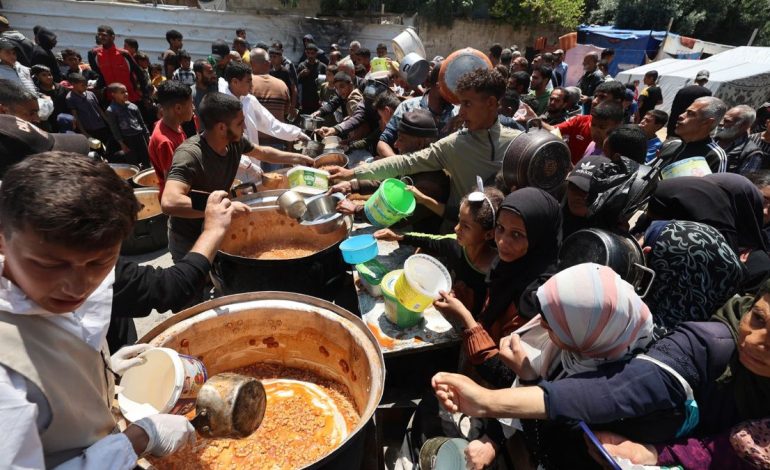
The context is a so-called fragile truce and a deepening humanitarian catastrophe. While aid agreements stipulate 600 trucks of assistance daily, only between 100 and 300 actually enter. Many of these carry commercial goods, out of reach for most of Gaza’s 2.2 million impoverished residents. The result is a collapse that touches everything, especially health.
Khitam Ayada, 30, a displaced woman sheltering in Nuseirat, felt this collapse directly. Suffering from kidney pain, she went to Al-Awda only to be told they had no power for an X-ray. “We lack everything in our lives,” she said, “even the most basic medical services.”
Gaza’s health system has been systematically dismantled. During the intense fighting, Israeli forces repeatedly struck hospitals, alleging Hamas used them as command centers—claims Hamas denied. The damage is both physical and systemic. Today, international organizations like Doctors Without Borders are managing about one-third of Gaza’s remaining 2,300 hospital beds. All five centers for severely malnourished children are run by foreign NGOs.
The war, sparked by the Hamas attack of October 7, 2023, has exacted a horrific toll. The figures, considered reliable by the UN, speak of profound suffering: over 70,000 killed in Gaza, mostly civilians; 1,221 killed in Israel, also mostly civilians.
But behind these vast numbers are acute, personal crises measured in liters of fuel and minutes of electricity. For the mothers in the maternity ward, the children in pediatrics, the victims in emergency at Al-Awda, the world has shrunk to the sound of a generator. Its hum is the sound of a heartbeat being artificially sustained. Every liter of diesel is a milliliter of hope.
As the newly delivered fuel flows, the clock is already ticking. Two days. The hospital has been promised more, but in Gaza, nothing is certain. The line between operational and shuttered is now as thin as a fuel gauge. For the staff and patients of Al-Awda, these 48 hours are a race against time, a brief window to treat the accumulating sick and wounded before the lights—and the lifeline—flicker out once more.
Also Read:
Turkiye Arrests 115 Suspected Daesh Members to Strengthen National Security
Last Christians Come Together in the Ruins of Quake-Hit Antakya