


How Limited Aid Is Slowing Down Relief Efforts in Sudan

In the sprawling, sun-scorched borderlands between Sudan and Chad, a humanitarian emergency is unfolding with little attention and even less support. As fighting intensifies in Sudan’s North Darfur region, waves of refugees cross into eastern Chad—exhausted, traumatized, and often arriving with nothing but the clothes they wear. What they find on the other side, however, is not a robust relief operation, but a hollowed-out system struggling under the weight of severe underfunding.
A Crisis of Resources
The stark reality is that international aid has not kept pace with the scale of displacement. The UN refugee agency, UNHCR, reports it has received only 38 percent of the $246 million needed this year to support Sudanese refugees in Chad. This gap has forced impossible choices: who gets help, and who must wait.
New arrivals depend almost entirely on the strained generosity of earlier refugees and local Chadian communities—people who are themselves living with very little. There are no proper shelters, only pieces of plastic sheeting to block the sun. No organized food distributions for most, only limited provisions for the most vulnerable.
Painful Prioritization
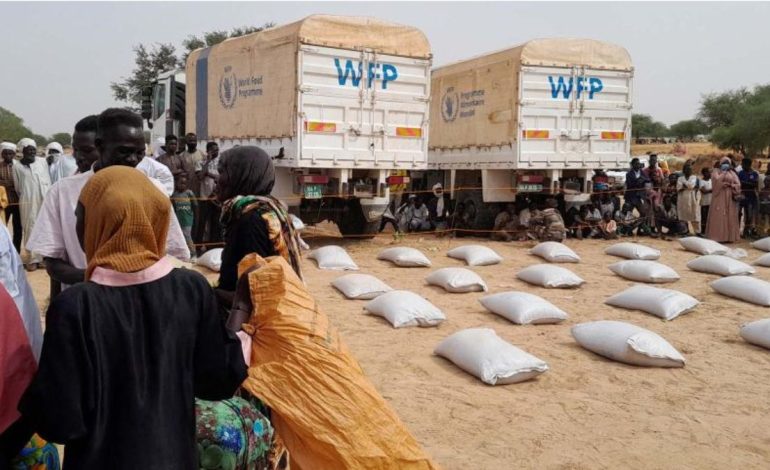
The World Food Programme resumed food distributions on Saturday, but only for pregnant and breastfeeding mothers and children under two. General food aid has been redirected to established camps farther from the border—a deliberate, if difficult, strategy to encourage refugees away from volatile frontier areas.
Yet even relocation programs are faltering. Moving people to more secure inland camps requires drilling boreholes, building latrines, and constructing shelters. Without funding, these basic steps cannot be taken, leaving families stranded in makeshift sites with almost no services.
The Human Impact
Behind these numbers are families who have walked for days, fleeing violence only to find another kind of crisis—one of neglect. Magatte Guisse, UNHCR’s representative in Chad, describes the scene plainly: “There are no tents, no durable shelters—just plastic sheeting to block the sun.”
In a region where temperatures soar and resources are scarce, plastic sheeting is not a solution. It is a sign of a system stretched beyond its limits.
A Call for Sustained Support
Sudan’s conflict has slipped from global headlines, but its consequences continue to ripple across borders. Chad, one of the world’s least developed countries, now hosts hundreds of thousands of refugees with little support from the international community. Without a significant increase in funding, the already thin lifeline for these families will fray further.
Humanitarian aid is not just a matter of charity; it is a stabilizing force in a deeply unstable region. When it dwindles, so does hope—and the risk of deeper suffering grows.
Also Read:
KSrelief Continues Lifesaving Water Support for Communities in Yemen
Israeli Settlers’ Attack on Pro-Palestine Group Sparks Outrage Near Jericho