



US May Urge UN to Authorize Peacekeeping Force in Gaza for Two Years
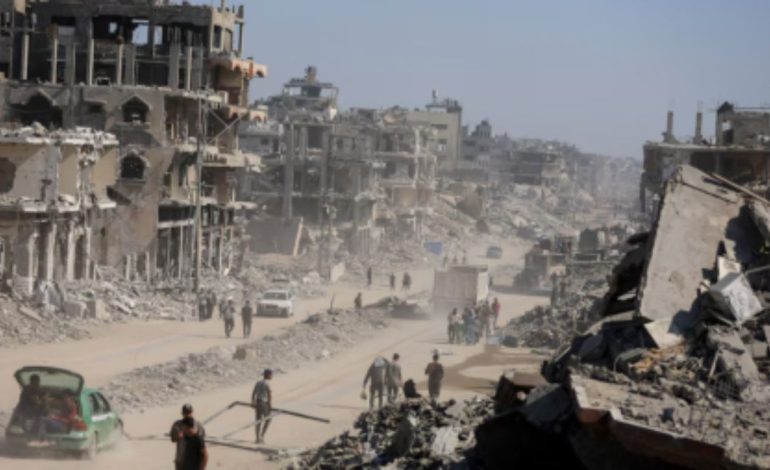

In a significant move that could reshape the future of Gaza, the United States has drafted a United Nations resolution proposing a detailed plan for transitional governance and international security in the enclave. The proposed resolution, seen by journalists, outlines a two-year roadmap aimed at stabilizing one of the world’s most volatile regions.
The draft text, which is still under development and has not been formally presented to the Security Council, proposes the creation of a “Board of Peace” to oversee a transitional administration. A key component of this plan is the establishment of an International Stabilization Force (ISF), which would be granted a robust mandate to “use all necessary measures”—a diplomatic term for the use of military force—to secure the area.
A Mandate for Stability
The proposed ISF’s responsibilities would be extensive. According to the draft, its primary duties would include:
- Protecting civilians and ensuring the safe delivery of humanitarian aid.
- Securing Gaza’s border areas with Israel and Egypt.
- Training and supporting a newly vetted Palestinian police force.
- Working toward the demilitarization of non-state armed groups and the decommissioning of weapons.
This plan aligns with the broader Trump administration vision, which explicitly calls for an end to Hamas’s governance and the demilitarization of Gaza. Historically, Hamas has firmly rejected such conditions, setting the stage for potential friction.
The Diplomatic Landscape
A State Department spokesperson acknowledged ongoing discussions with UN Security Council members but declined to comment on the specifics of the leaked document. Diplomats note that the draft has been shared with a select group of countries, though formal negotiations among the full 15-member Council have not yet begun.
The resolution specifies that the ISF would deploy under a unified command, established by the Board of Peace in close consultation with Egypt and Israel. This deployment would only proceed after detailed agreements on the status and rules of engagement for the forces are finalized.
The Search for Partners
A critical unanswered question is which nations would contribute troops to this multinational effort. The Trump administration has stated it will not deploy U.S. soldiers to Gaza. Instead, it has reportedly been in talks with several countries, including Indonesia, the United Arab Emirates, Egypt, Qatar, Türkiye, and Azerbaijan, to form the backbone of the force.
The willingness of these, and potentially other, nations to commit troops remains a major hurdle. The success of the entire proposal may hinge on securing strong participation from regional partners, particularly Arab states.
As the draft continues to be refined behind closed doors, the international community watches closely. This proposed resolution represents one of the most concrete plans to date for addressing the long-standing governance and security vacuum in Gaza. Its journey through the Security Council—and the reactions from key players on the ground—will determine whether this blueprint becomes a reality.
Also Read:
On the Second Day of the AlUla Camel Cup, Saudi Arabia, the United Arab Emirates, and Qatar all Win
JLL Predicts the GCC Healthcare Sector will Reach $135 Billion by 2027.