

Trump and Xi Meet in South Korea: A Step Toward Easing Trade Tensions
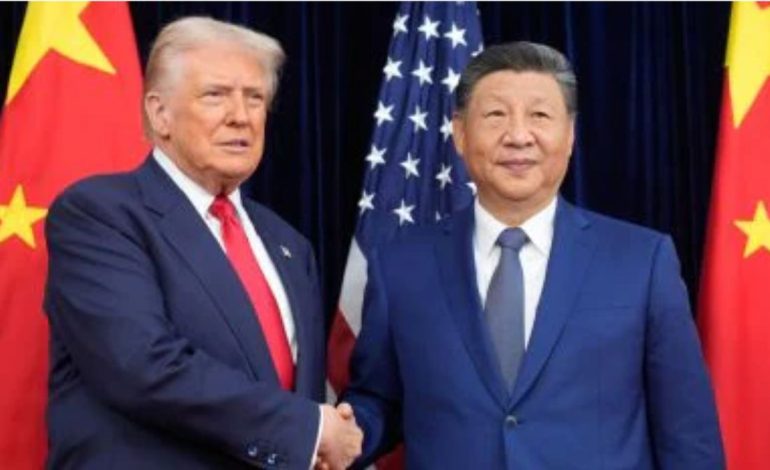

The meeting between President Donald Trump and Chinese leader Xi Jinping in Busan, South Korea, marks a significant moment in the ongoing efforts to ease escalating trade tensions between the world’s two largest economies. After months of contentious tariff battles and retaliatory measures, both sides appear ready to explore a path toward stabilization that could benefit global markets.
Since his return to the White House for a second term, President Trump has aggressively used tariffs as leverage against China, targeting a range of goods including those linked to China’s role in fentanyl production. In response, China imposed export limits on rare earth minerals, essential for modern technology and manufacturing, signaling how intertwined and fragile the economic relationship has become.
The upcoming meeting holds renewed urgency as diplomatic signals suggest a willingness to negotiate. The U.S. appears to be stepping back from threats of additional import taxes, while China has shown a readiness to ease its rare earth export restrictions and increase agricultural purchases from America, such as soybeans. On his way to South Korea, President Trump even indicated he might reduce tariffs tied to the fentanyl issue, emphasizing that the relationship with China “is very good.”
Calling the meeting the “G2,” President Trump acknowledges the unique economic weight carried by the U.S. and China, distinct from other international groups like the G7 or G20. The summit takes place just ahead of the Asia-Pacific Economic Cooperation conference, where both leaders will engage with regional and global partners.
Preparations for this encounter included prior discussions in Kuala Lumpur, where negotiators from both countries crafted a “preliminary consensus.” This groundwork has reassured investors and businesses worldwide, pushing U.S. markets higher amidst hopes for a trade framework that could reduce uncertainty.
Despite the optimistic tone, deep strategic competition remains. The U.S. and China continue to vie for dominance in manufacturing, advanced technologies including artificial intelligence, and influence over global issues such as the ongoing conflict in Ukraine. President Trump has indicated he is not planning to raise sensitive security topics like Taiwan during this meeting, focusing instead on economic cooperation.
Experts view the potential agreement as a tactical move to calm immediate tensions rather than a lasting solution to the broader rivalry. Both nations understand they have significant leverage but are also aware that aggressive confrontation risks significant damage to their own economies.
The delicate balance is evident in the history of recent tariff actions. While Trump once threatened to impose import taxes as high as 145 percent on Chinese goods, those plans were tempered after market pushback. Similarly, China’s cycles of tightening and loosening rare earth exports reflect a cautious approach to applying pressure without triggering irreversible escalation.
Looking ahead, what happens after the meeting will be telling. President Trump plans to return directly to Washington, while Xi will remain in the region to engage with Asia-Pacific leaders during the APEC summit. This continued diplomacy underscores China’s effort to position itself as a steady and reliable partner amid global uncertainties—an image it hopes will win support from countries concerned about U.S. tariff policies.
As these two economic giants seek common ground, the world watches closely for signs that cooperation can prevail over conflict, at least for now, as both sides navigate a complex relationship defined by competition and cooperation alike.